
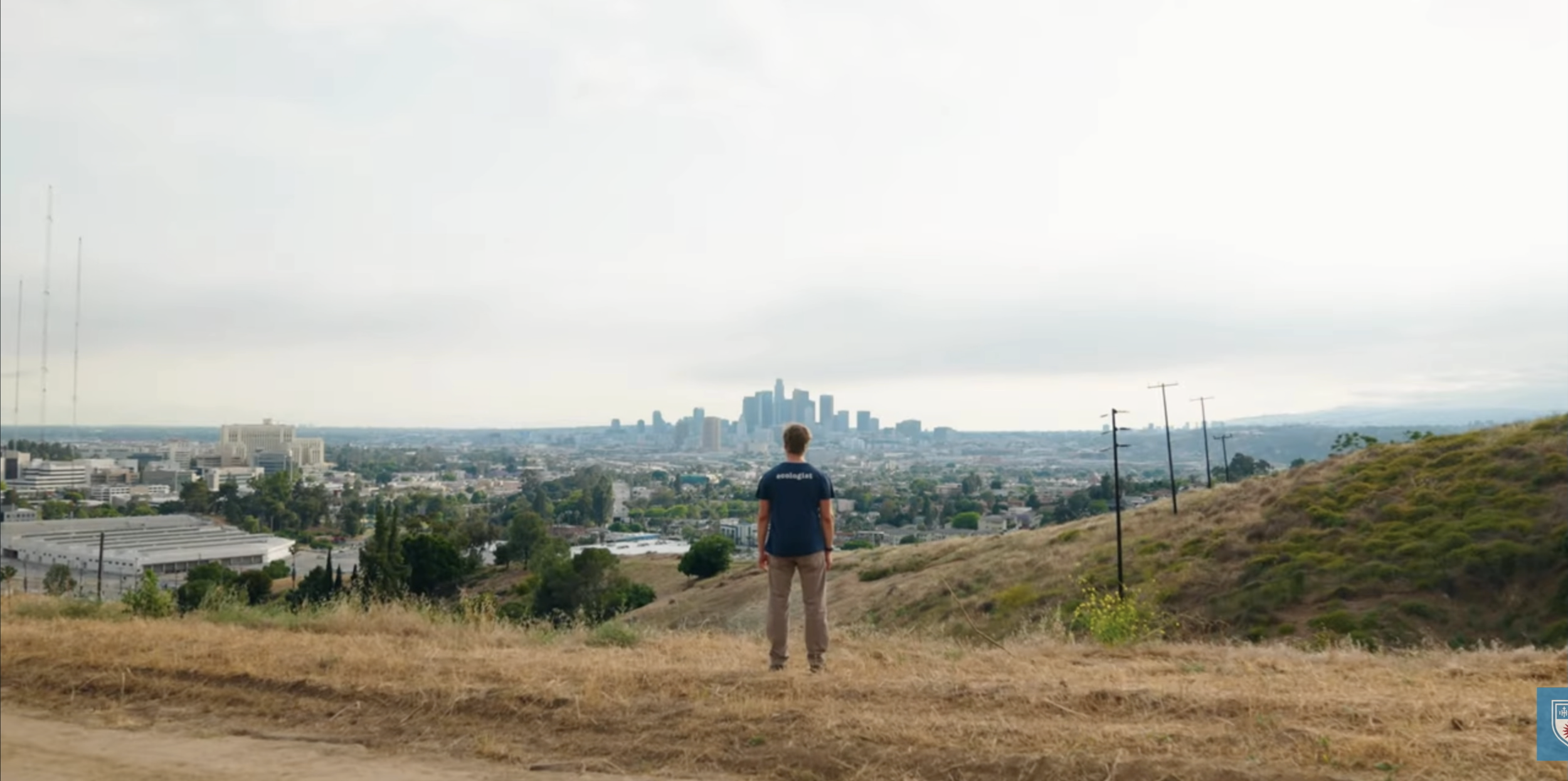
The Willette Lab of Applied Ecology
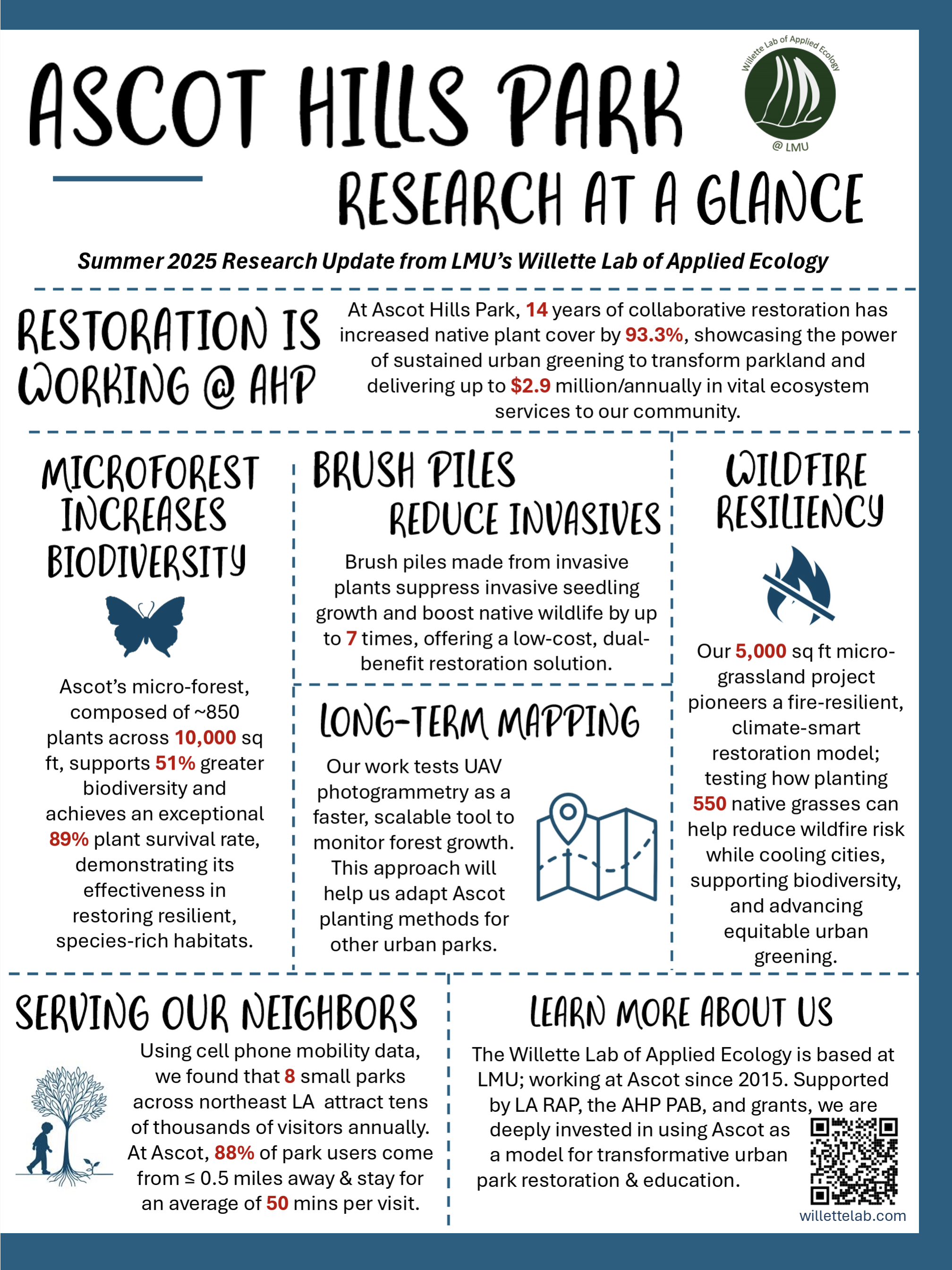
The Willette Lab at Loyola Marymount University uses science to protect and restore the natural world. Ascot Hills Park is one of their living laboratories. Real ecological research is happening on these hills right now.
RESEARCH HIGHLIGHTS
Published Science at Ascot Hills
Peer-reviewed studies conducted in the park, available to download.
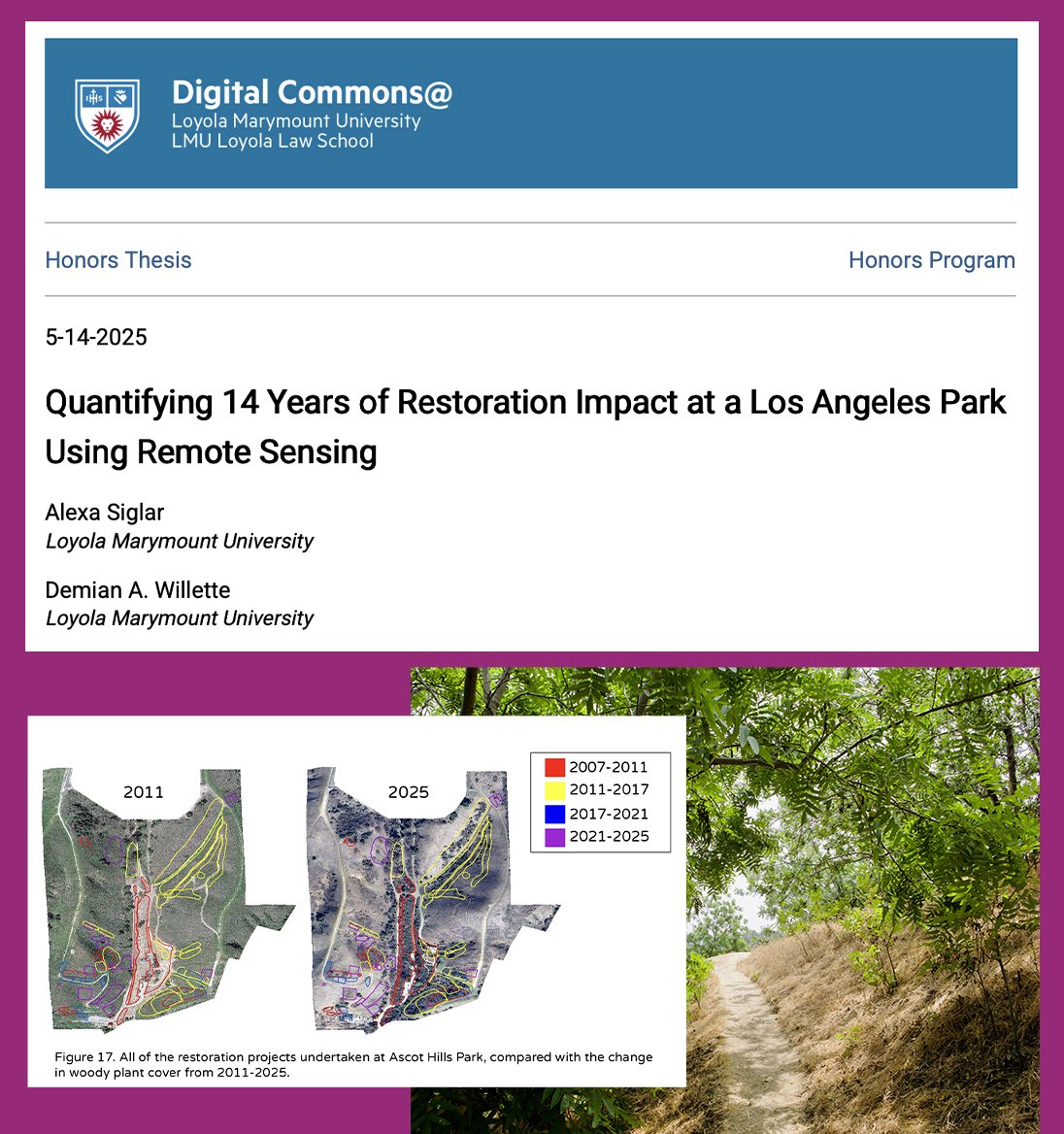
2025: LMU • LOYOLA MARYMOUNT UNIVERSITY • HONORS THESIS
Quantifying 14 years of restoration impact at a Los Angeles park using remote sensing
Using satellite imagery and machine learning, LMU student Alexa Siglar mapped every restoration project at Ascot Hills Park from 2011 to 2025 — and measured what changed. The verdict: native woody plant cover nearly doubled, a direct result of 14 years of continuous effort by five stakeholder organizations and hundreds of volunteers.
+93% increase in woody plant cover
44 restoration sites mapped
5 stakeholder organizations
Siglar, A., & Willette, D.A. (2025). Quantifying 14 years of restoration impact at a Los Angeles park using remote sensing. LMU Honors Thesis, #593.
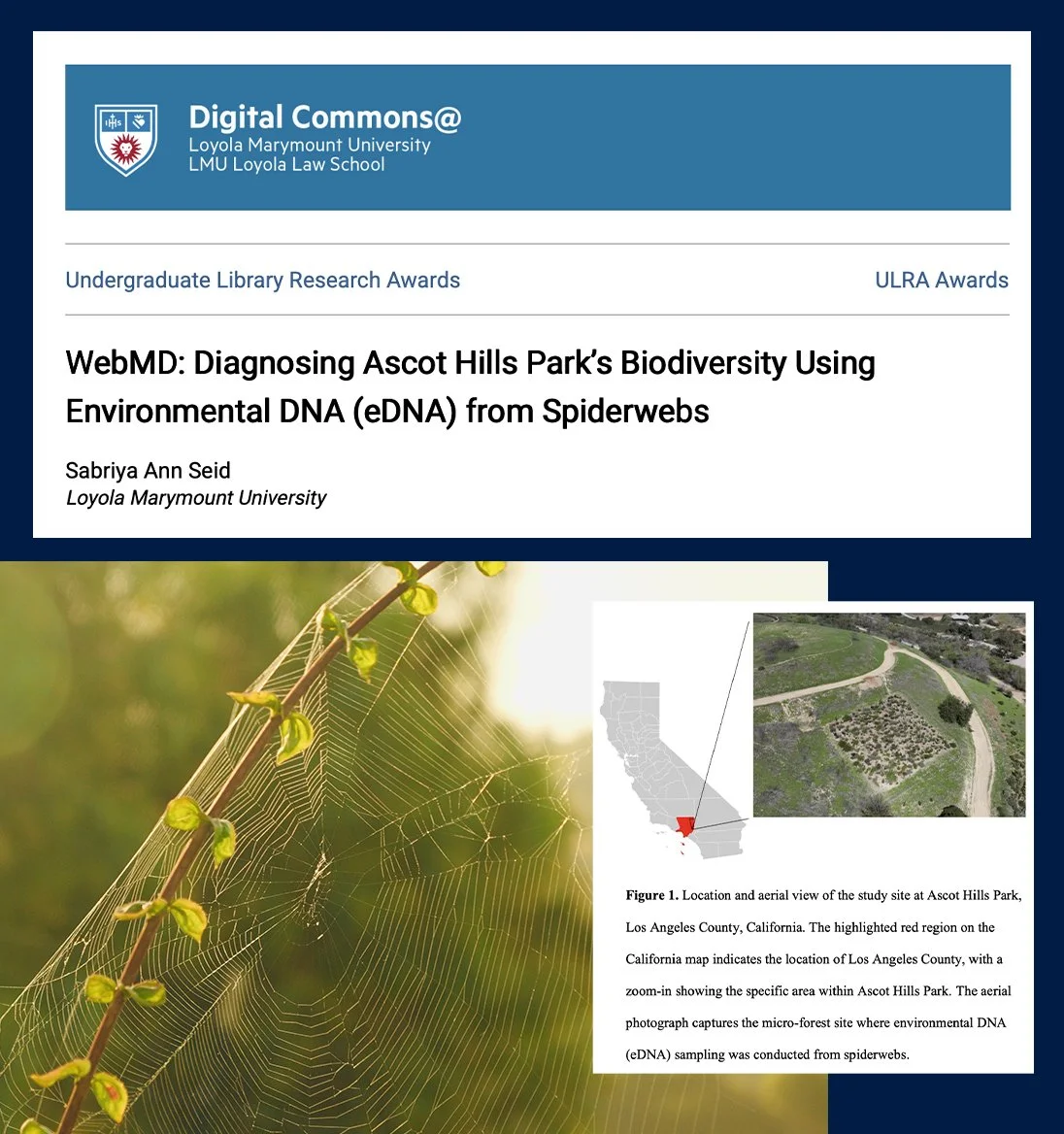
2025: LMU • LOYOLA MARYMOUNT UNIVERSITY • Undergraduate Library Research Awards
WebMD: Diagnosing Ascot Hills Park's Biodiversity Using Environmental DNA (eDNA) from Spiderwebs
The first eDNA biodiversity study conducted at Ascot Hills Park's micro-forest. Using spiderwebs as passive air filters, an LMU researcher extracted environmental DNA - genetic traces left behind by passing wildlife — and identified hundreds of species from just six webs collected in a single afternoon.
232 species detected from 6 spiderwebs
173 species found only by eDNA — invisible to visual surveys
Seid, S.A. (2025). WebMD: Diagnosing Ascot Hills Park's Biodiversity Using Environmental DNA (eDNA) from Spiderwebs. LMU Undergraduate Library Research Awards.
2024: RESTORATION ECOLOGY
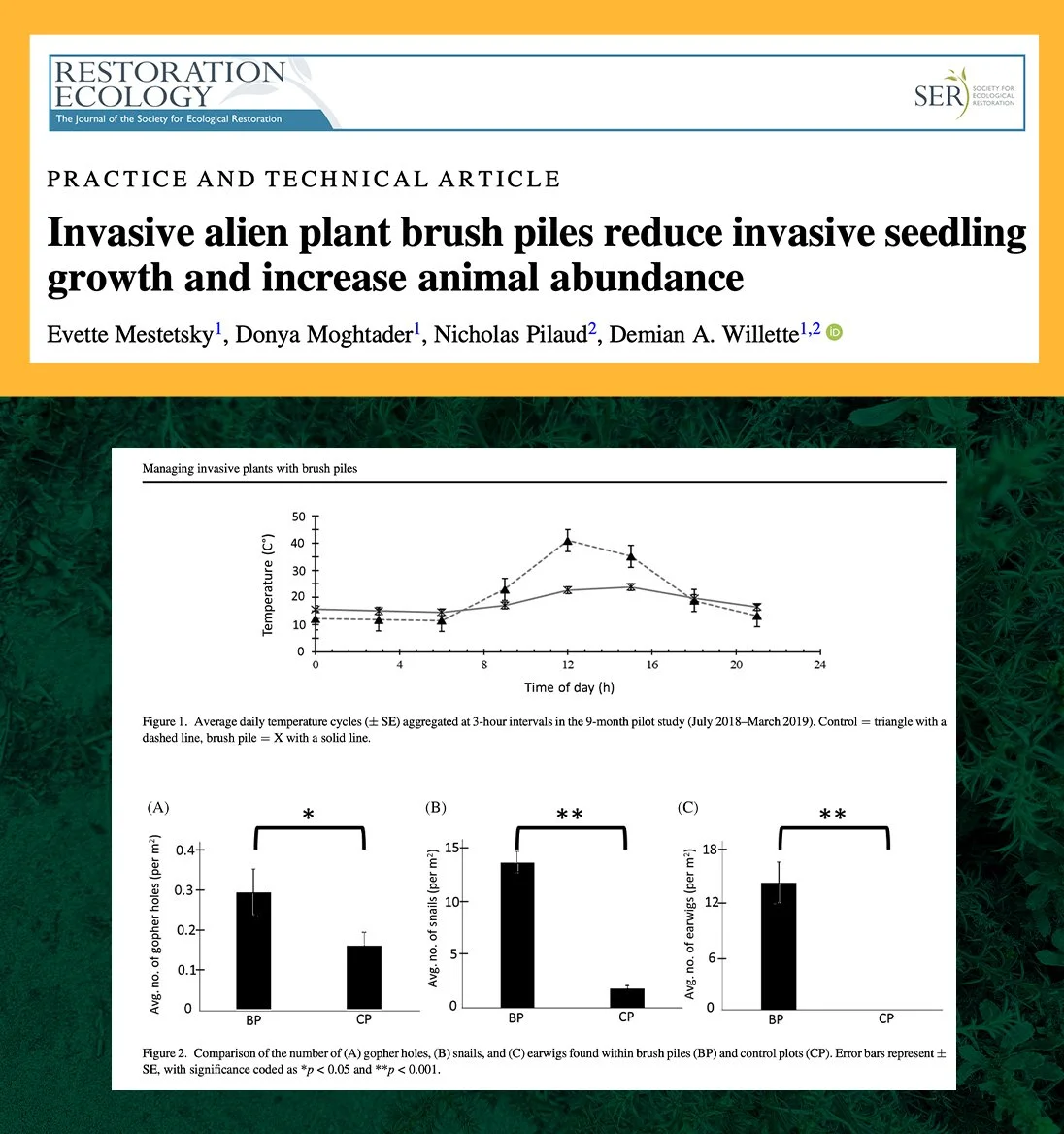
Invasive plant brush piles reduce invasive seedling growth and increase animal abundance
Tumbleweed (Russian thistle) removed from the park was repurposed as brush piles — and the results surprised researchers. The piles completely suppressed invasive seedling regrowth underneath them, while supporting significantly more wildlife than open ground.
0 invasive seedlings under piles
2–7× more animals vs. control plots
Mestetsky, E., Moghtader, D., Pilaud, N., & Willette, D.A. (2024). Restoration Ecology, 32(4), e14115.
2022: URBAN ECOSYSTEMS
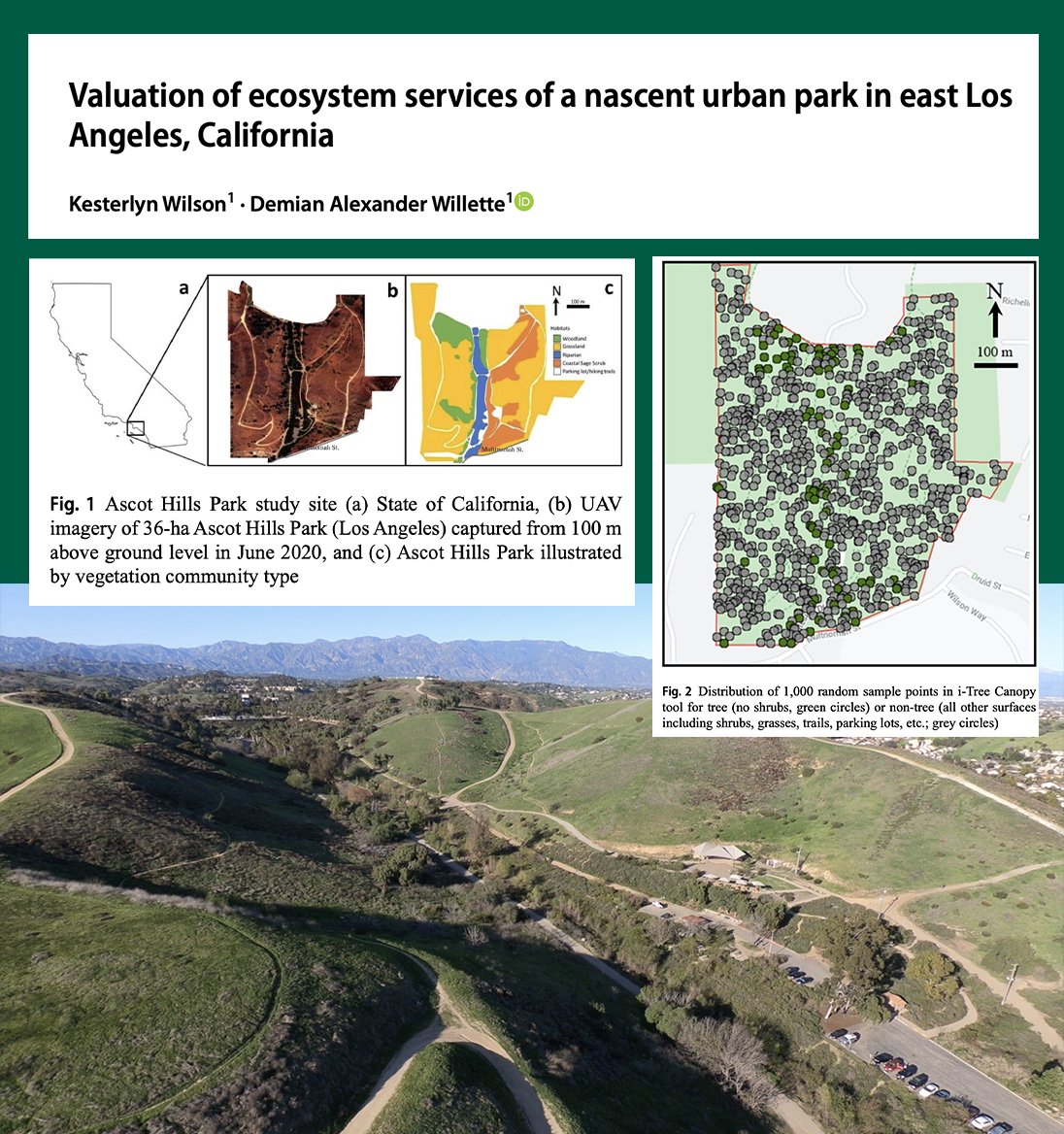
Valuation of ecosystem services of a nascent urban park in east Los Angeles
The first scientific estimate of Ascot Hills Park's ecological and economic value. Using four methods, including drone imagery, tree measurements, and real estate comparison, researchers calculated the park's annual benefit to the surrounding community.
$2.9M in ecosystem services per year
426 individual trees measured
Wilson, K., & Willette, D.A. (2022). Urban Ecosystems, 25(6), 1787–1795.
IN THE NEWS
The park's science, beyond the journal
When the work at Ascot Hills gets noticed: news coverage, features, and media about the research happening here.
npr Short Wave: January 7, 2026
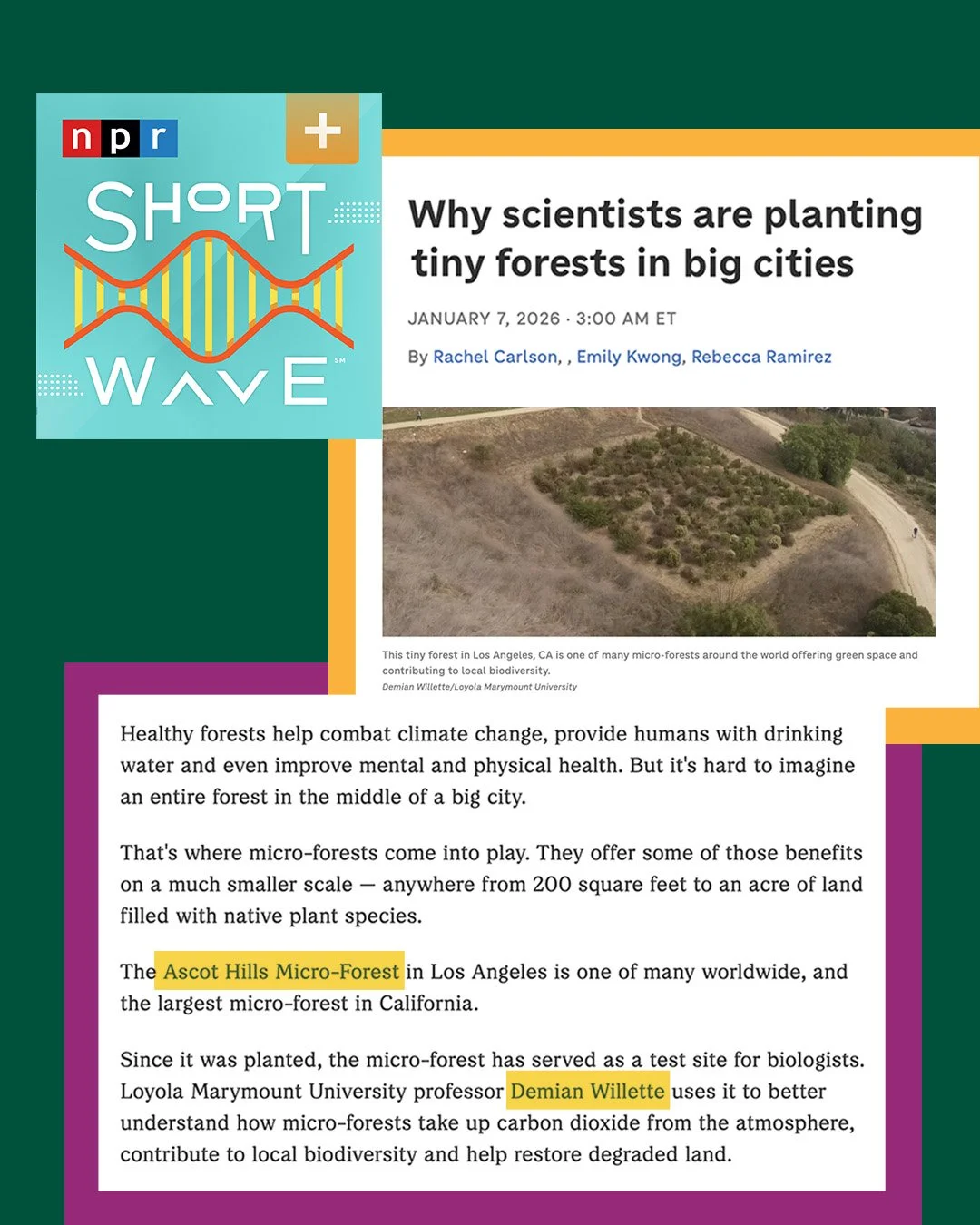
Why scientists are planting tiny forests in big cities
The Ascot Hills Micro-Forest is spotlighted as the largest micro-forest in California — and a working research site. Dr. Demian Willette and his LMU team use it to study carbon capture, biodiversity, and land restoration in a real urban neighborhood.
LAist Explore LA: July 12, 2026
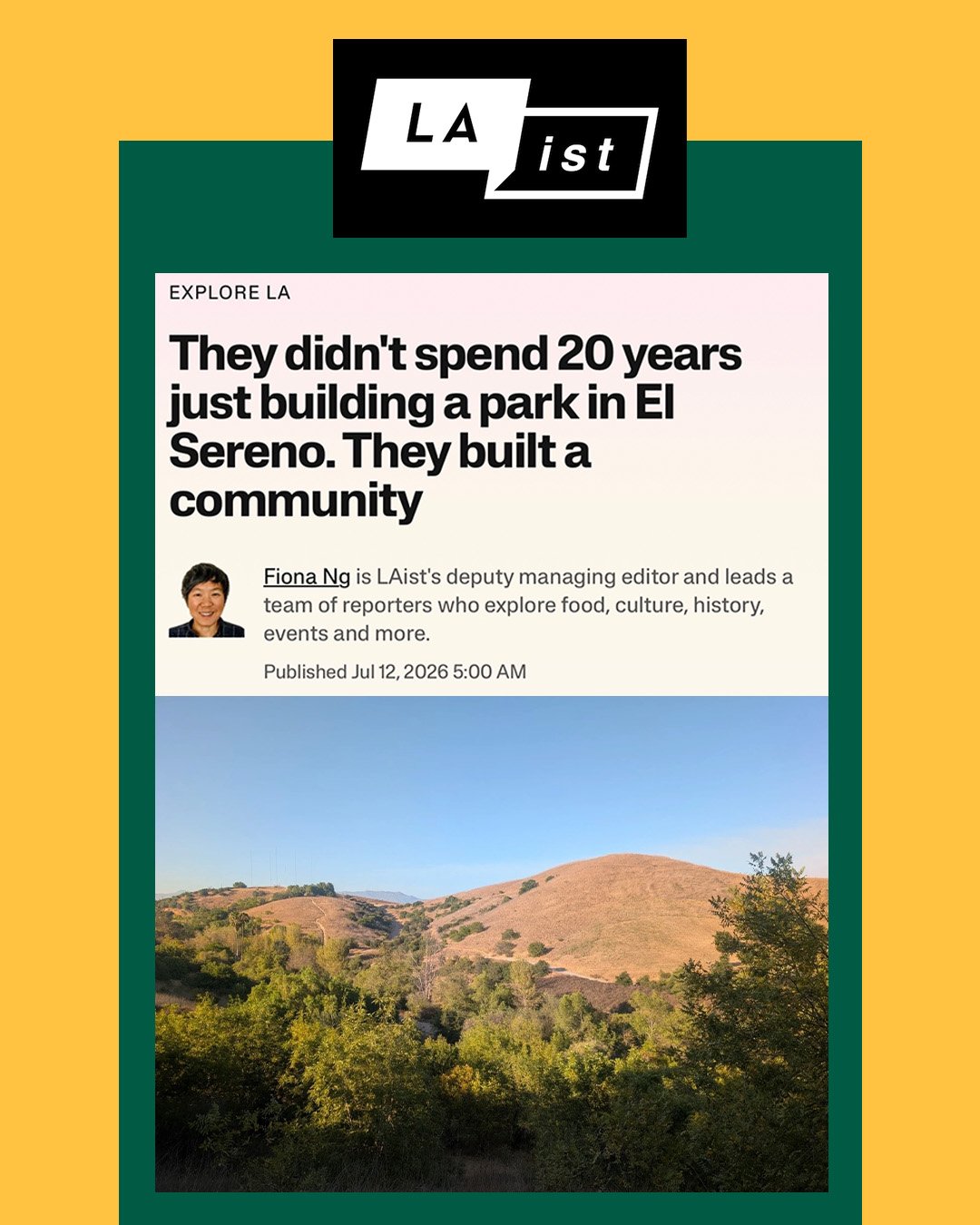
They didn’t spend 20 years just building a park in El Sereno. They built a community
LAist's Fiona Ng tells the story of how El Sereno residents and retired civil engineer Jerry Schneider spent two decades transforming 93 acres of fenced-off hillsides, once slated to become a sports complex, into a natural park and native habitat. The piece features Park Advisory Board members past and present, including Jerry Schneider, Raymond Rios, and Val Marquez, along with the board's next generation of stewards: chair Dr. Demian Willette, whose micro-forest research is proving habitat restoration can thrive anywhere in the city, and board member Lluvia Arras.
ACTIVE RESEARCH
Current Projects at the Park
Ongoing studies without published papers yet.

2025: University of San Diego · Master's thesis · Ongoing
Ascot Hills Microforest: Drone & Field Monitoring
Shelby Page, a graduate student in Environmental and Ocean Sciences at USD, is testing how accurately drones can track the growth of the Ascot Hills Microforest. She compares plant heights measured from drone imagery with heights measured by hand on the ground. Her work also helps answer a bigger question: can the Miyawaki "tiny forest" method succeed in a Mediterranean climate like LA's? The project began in the Willette Lab at LMU, and Dr. Willette serves on her thesis committee.
96 plants measured by hand and from the air
4 forest layers tracked, from oaks down to sages
Page, S., Willette, D., Walther, S., & Taddeo, S. UAV and field assessment of a modified Miyawaki forest in a Mediterranean climate.
-
![]()
Micro-forest & grassland monitoring
Long-term tracking of restored native plant communities on the east ridge and central valley.
(Ongoing) -
![]()
Long-term vegetation mapping
Drone and ground survey mapping of plant community changes since the park's establishment in 2006.
(Ongoing) -
![]()
Native animal habitat creation
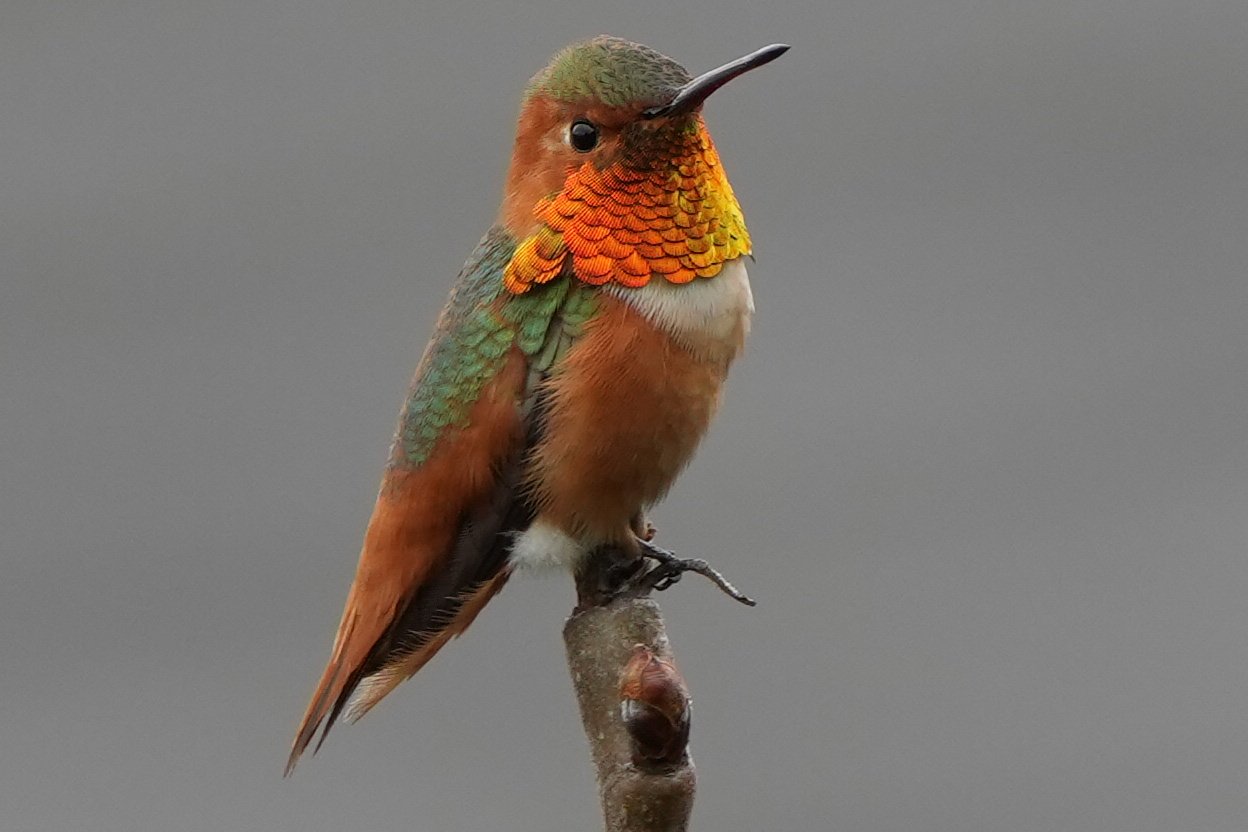
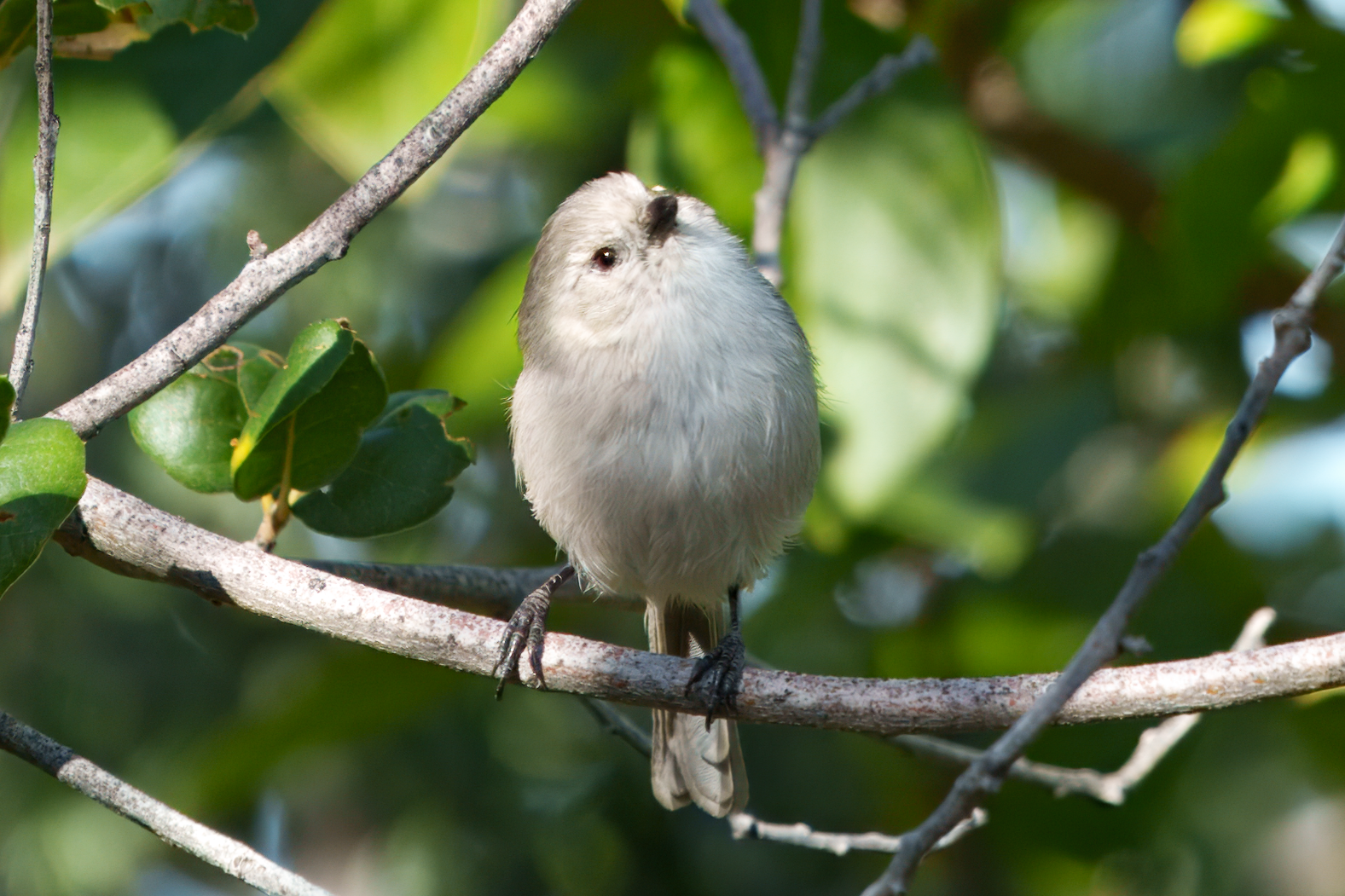
Monitoring wildlife use of restored zones, with a focus on reptiles, pollinators, and native birds.
(Ongoing) -
![]()
Invasive species control trials
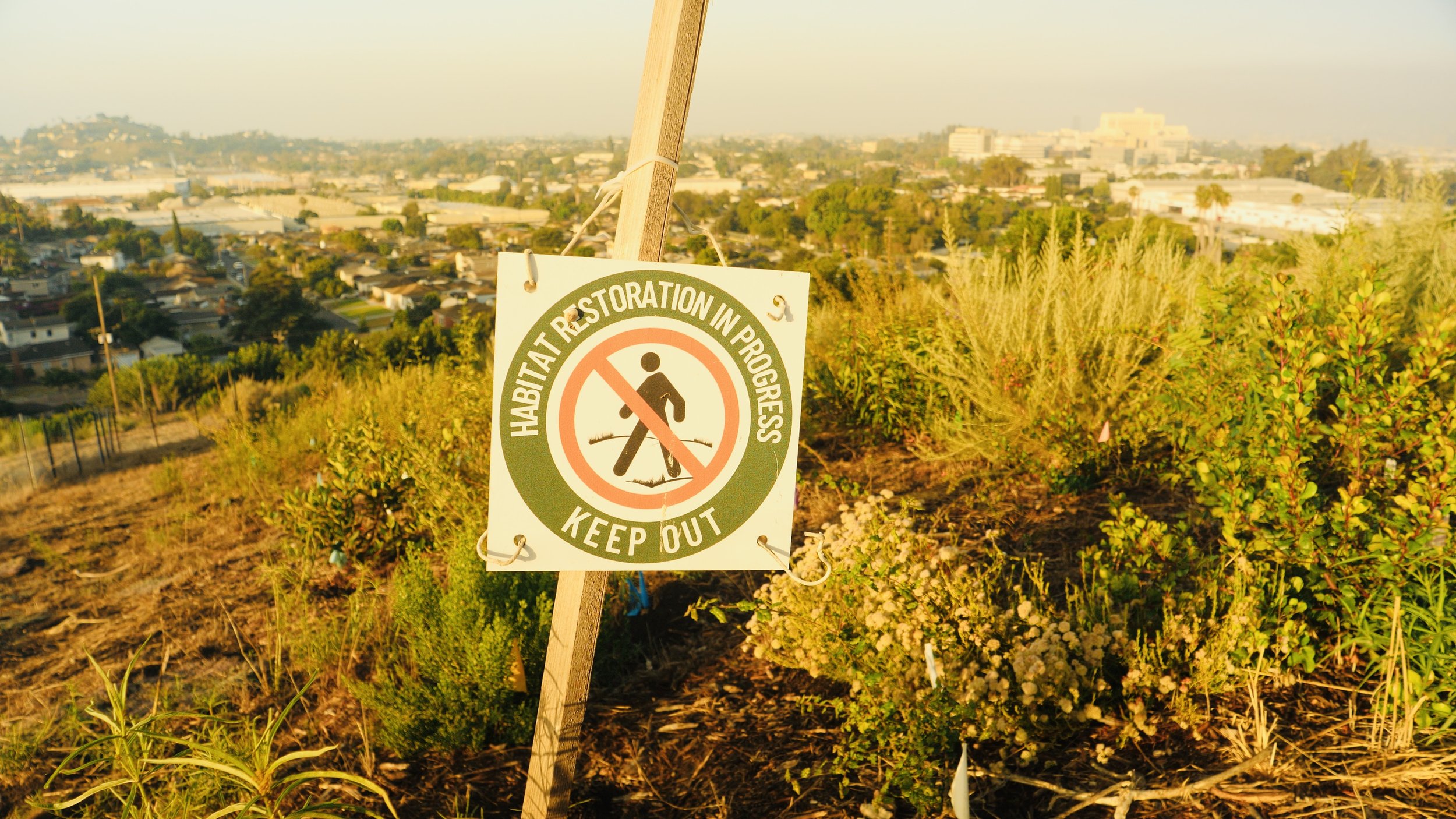
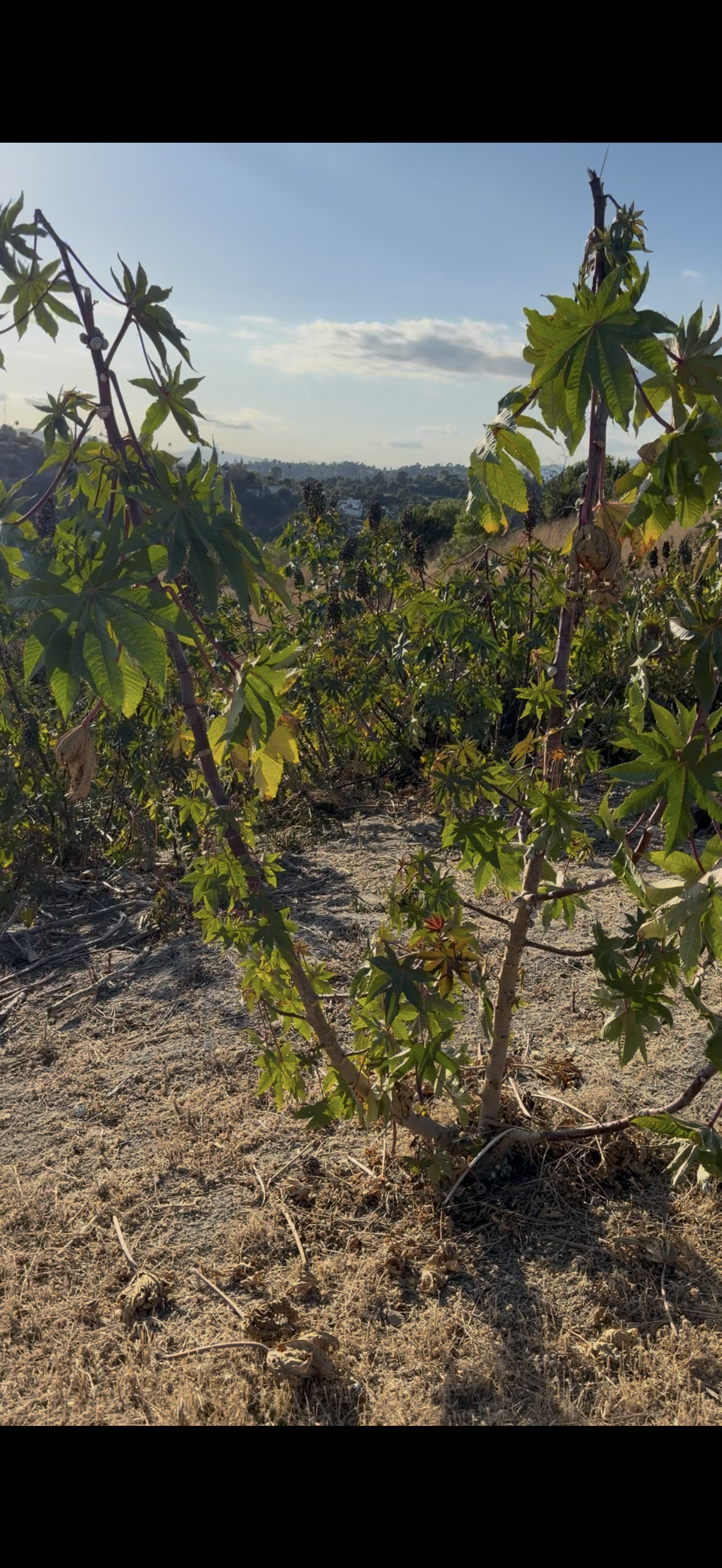
Testing brush pile methods with castor bean and tree-of-heaven biomass, following the 2024 tumbleweed study.
(Ongoing)

INTERPRETIVE RESOURCES
Downloadable Resources
Educational materials from the lab
Connect with the Research
-
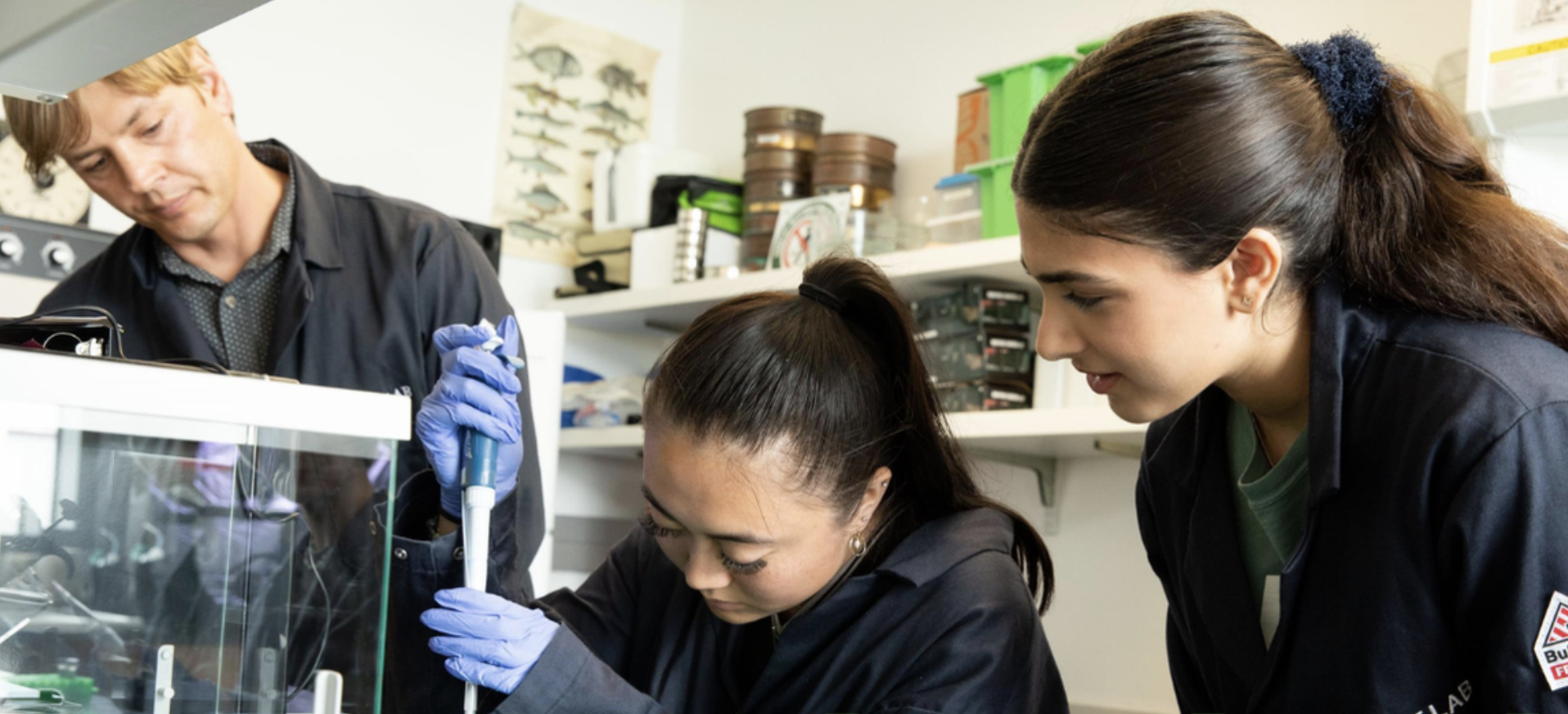
Students & Researchers
The Willette Lab partners with LMU students across biology, ecology, and environmental science. Interested in fieldwork at Ascot Hills Park? Visit the lab's website for current opportunities.
-
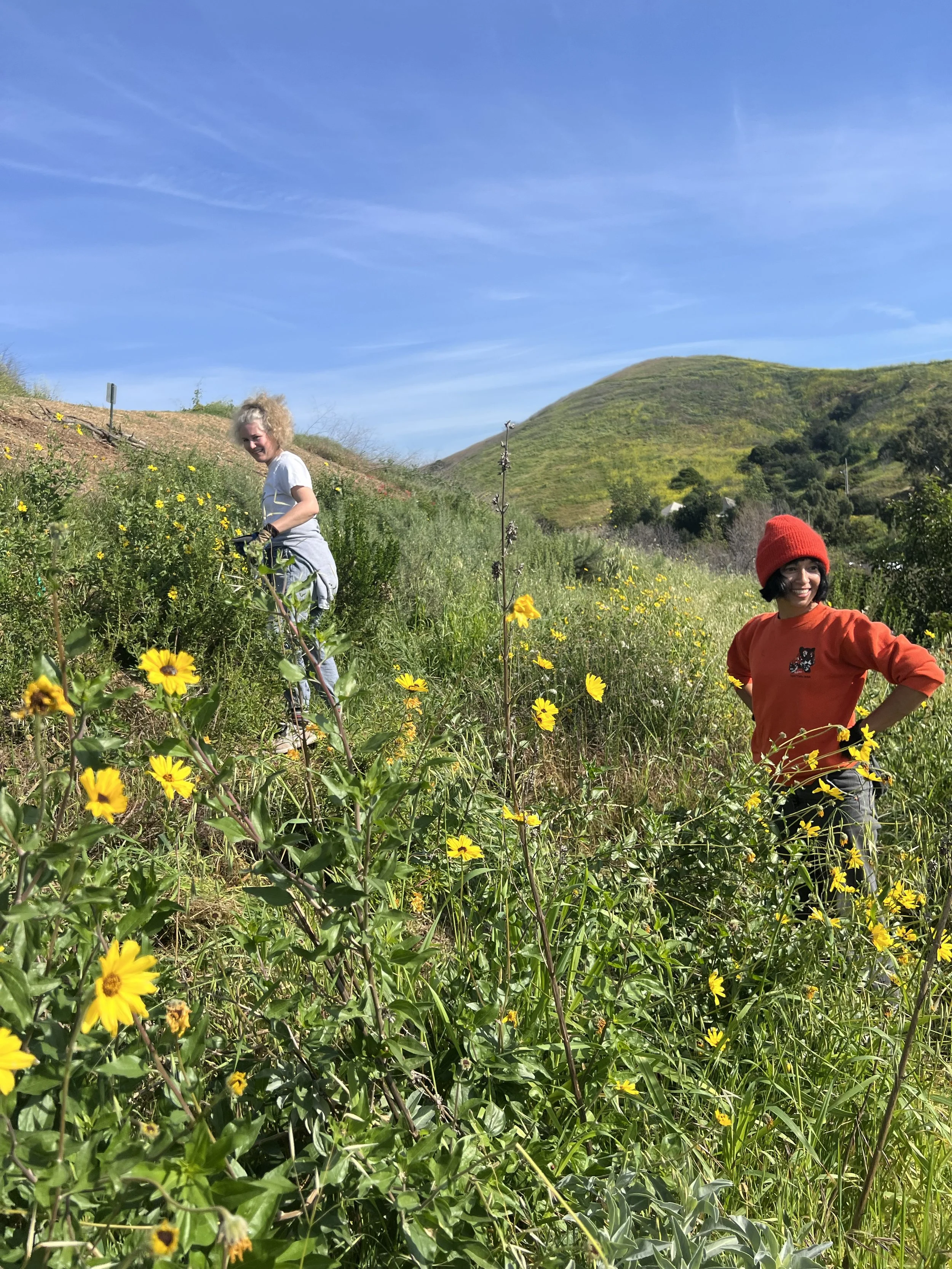
Community Science
Join a Green Team or nursery volunteer event or a bird walk and contribute to ongoing data collection. No science background required - just curiosity and a love for this park. Use apps like iNaturalist, eBird, or Merlin ID to identify plants and animals you see at our park.
-
Have an idea? Let's collaborate.
Ascot Hills Park is an active research site, and we're always looking for new partnerships, perspectives, and questions worth asking. If you're a researcher, educator, or community member with an idea for a study or collaboration, reach out.